VirtuActive had everything offline that was not translating online. Word of mouth was strong, builder relationships ran deep, and the team had designed over 5,000 homes nationwide, but the homepage held visitors for an average of 12 seconds before they bounced.
The issue was not aesthetics. It was a disconnect between energy and conversion.
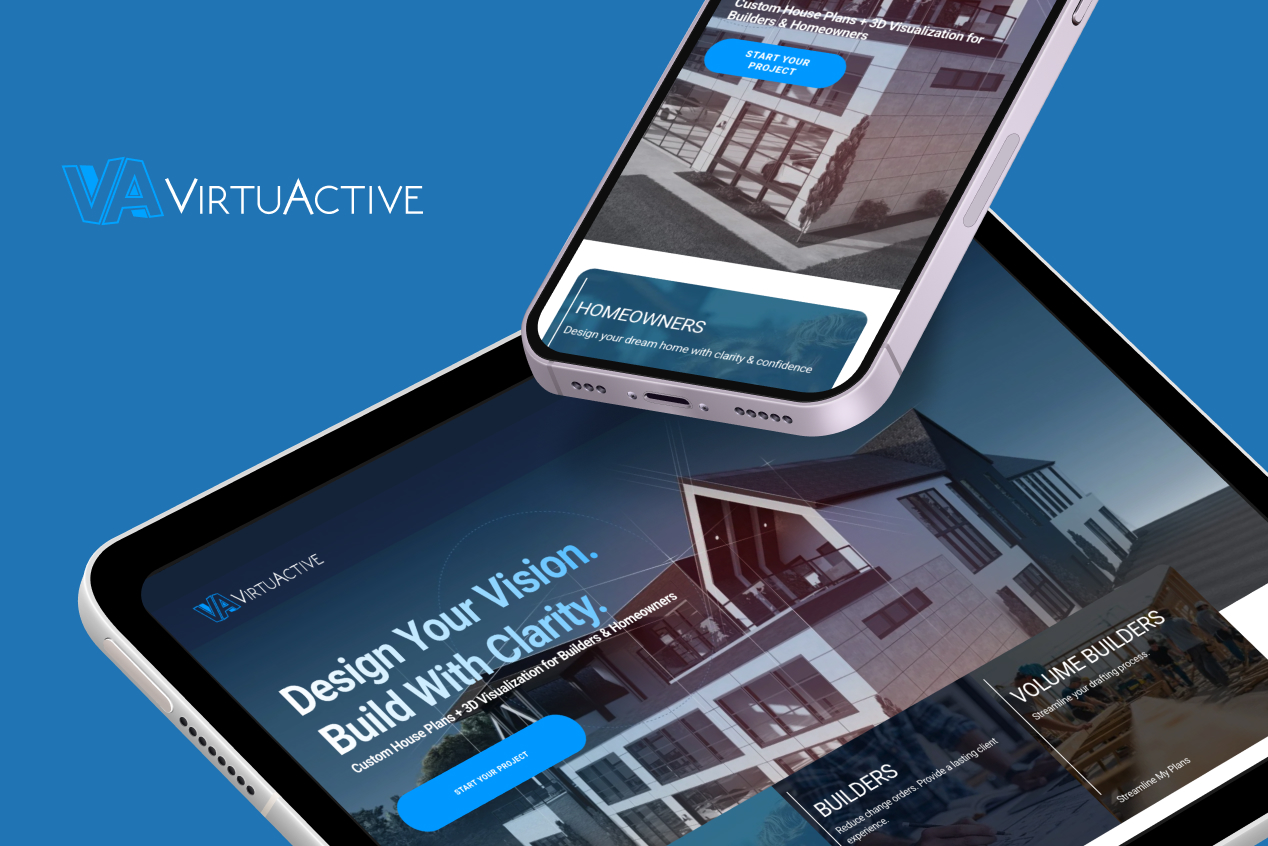
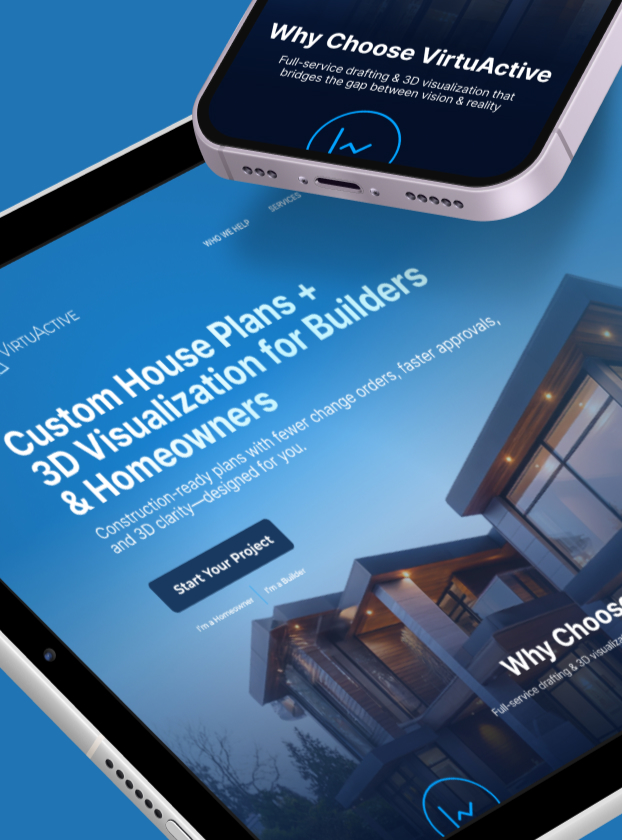
The hero treatment led with 3D visualization, which created a brand identity problem visible in plain text: most first-time visitors thought VirtuActive was a 3D company. Leadership had a sharper version of it in discovery interviews: we are not a 3D company, we are a design company that happens to do 3D.
The site was speaking to four different buyer personas, homeowners, remodelers, custom builders, and volume builders, through one generic flow, with dual competing CTAs and a Volume Builder offering (identified as a potential 5 to 6x growth opportunity) buried under generic service tabs.
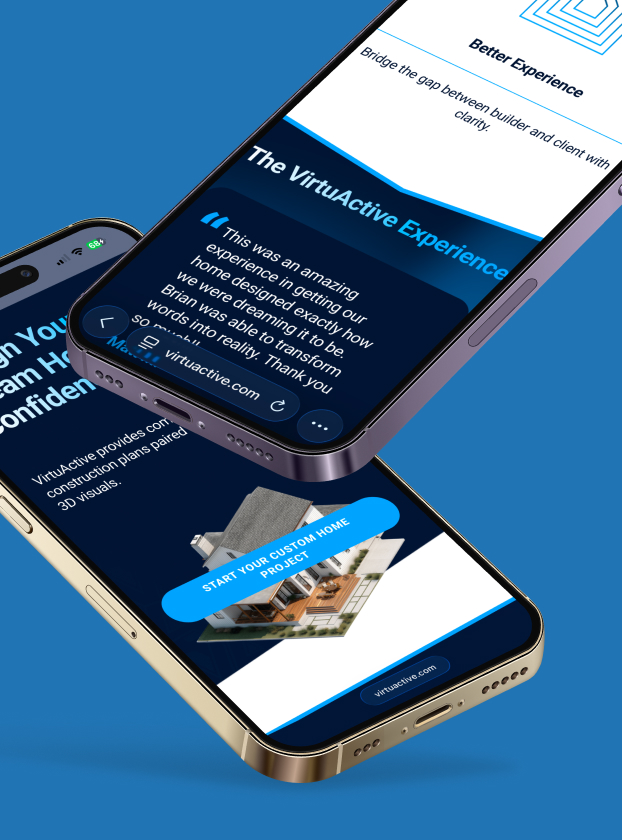
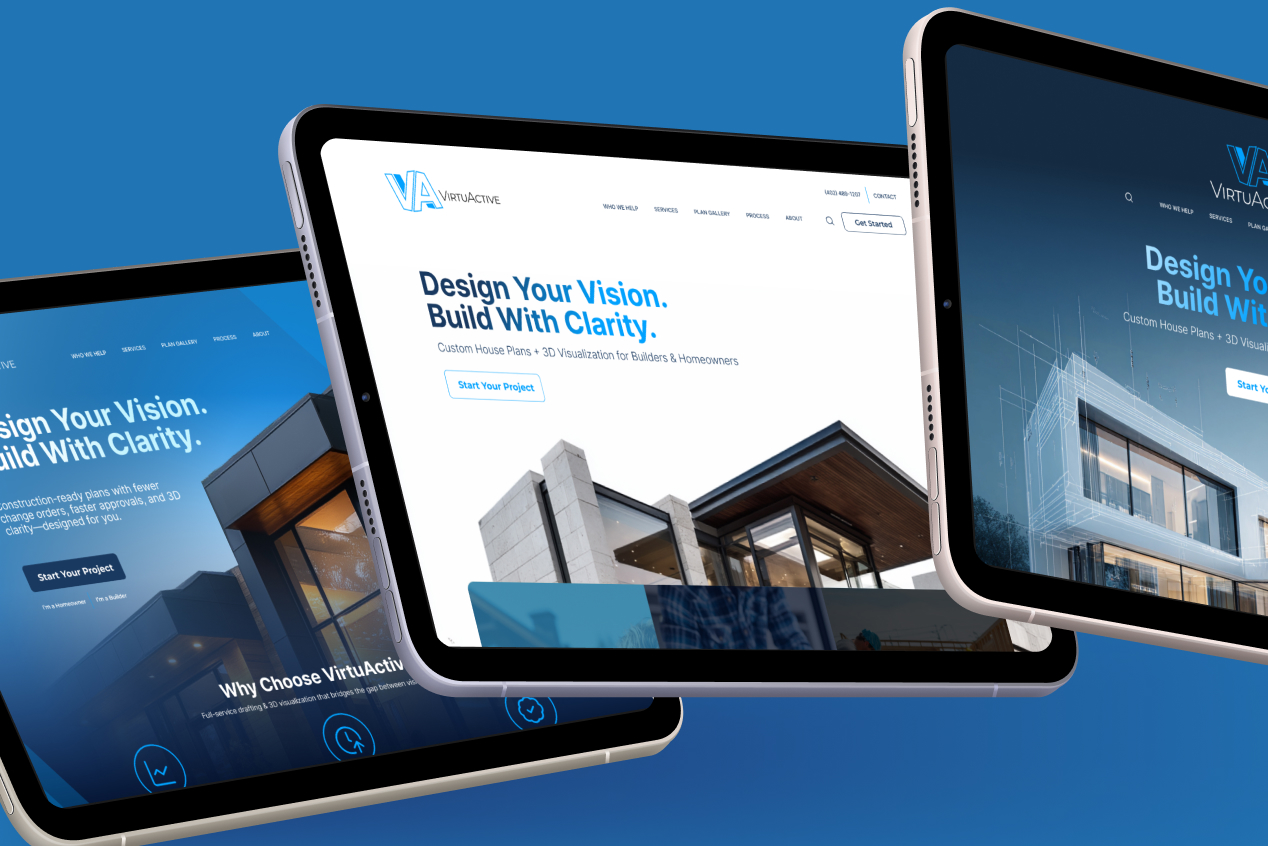
The fix started with a single leadership conversation that surfaced the core brand tension, paired with one clear signal in Google Analytics 4: that 12-second engagement time. From there, hero copy was rewritten to lead with design, a persona-routing prompt was added to the homepage, competing CTAs were replaced with one persistent action, and the Volume Builder vertical got its own dedicated landing page.
This is the same approach behind every Revenue Website Sprint: start with research, move to focused recommendations, then execute with intention. The rigor stays consistent regardless of engagement size, only the delivery timeline changes.