Mayo Clinic's patient rooms were still running on the same computing setup they had for a decade: a desktop workstation bolted to the wall, pulling physicians away from the patient to chart. I designed SmartSpace to move the EMR to the point of care instead, on a mobile tablet, in the room, in real time, and measured a 17% reduction in patient wait time and care delivery time over a 3 month clinical trial.
A seamless healthcare environment depends on systems that address both clerical and operational challenges together, starting with where the physician is actually standing.
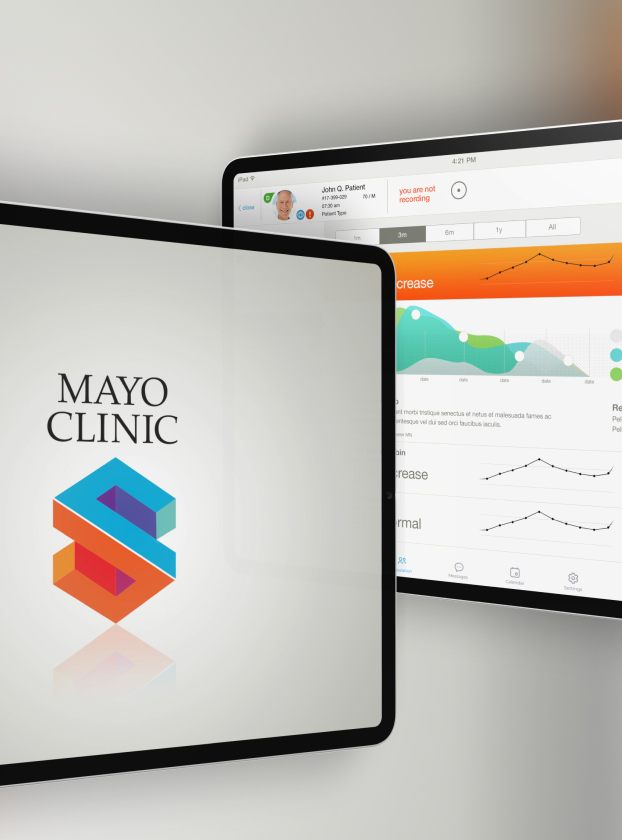
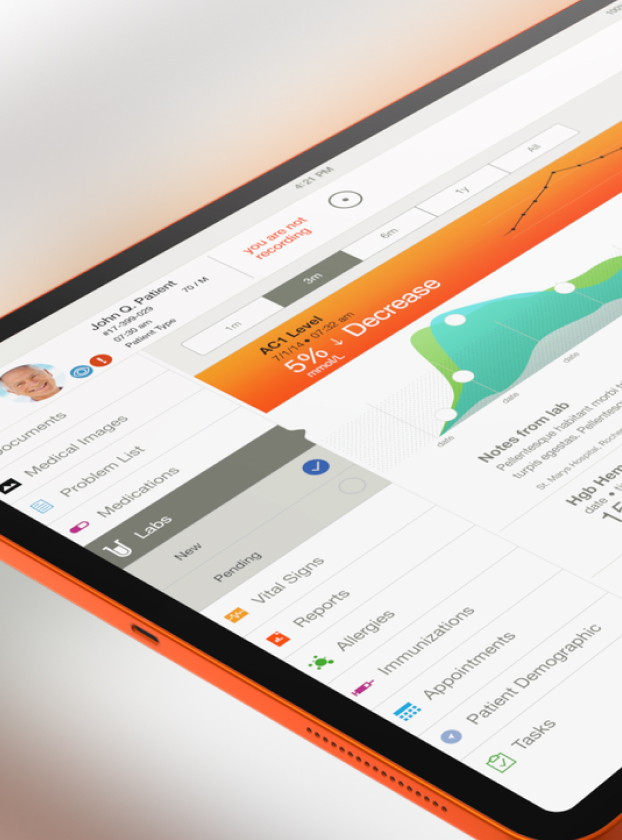
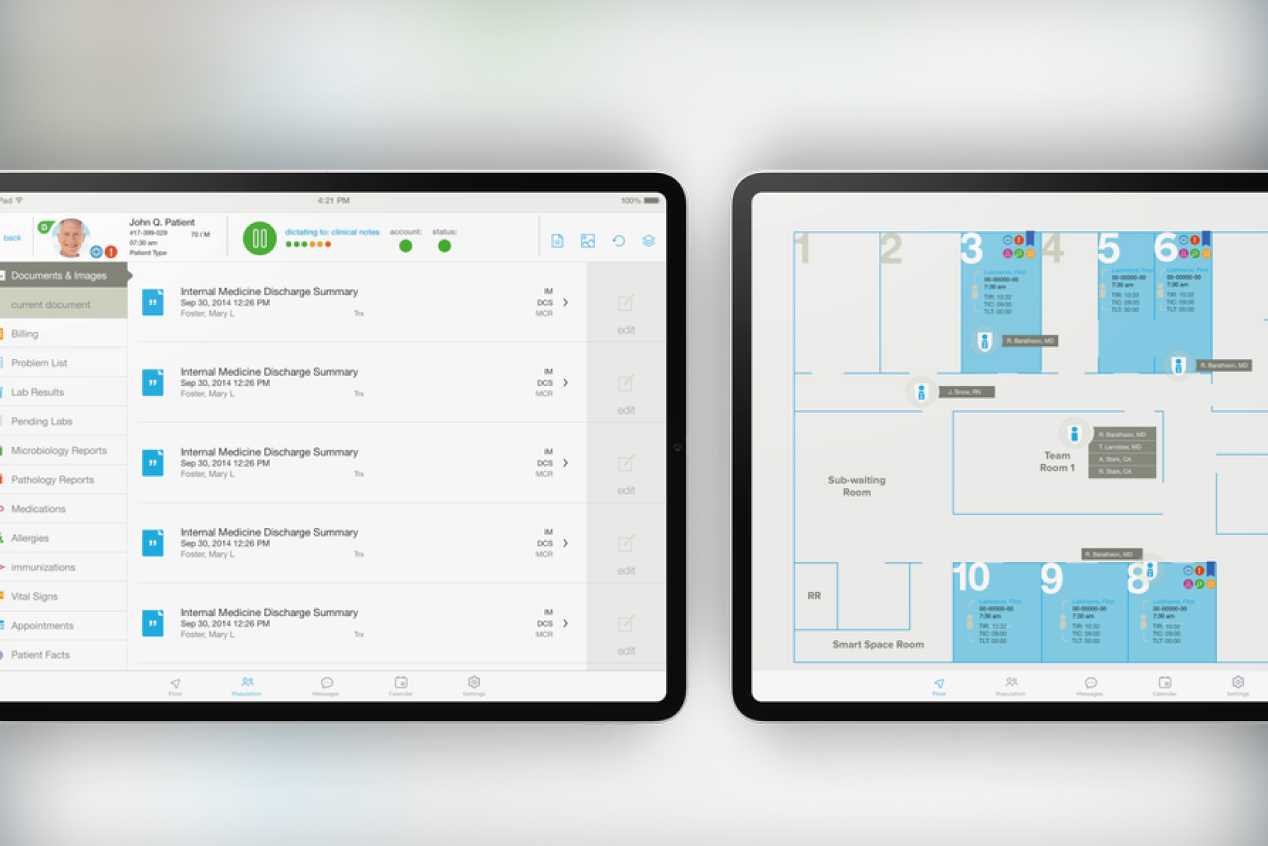
Traditional clinic rooms relied on fixed desktop systems that pulled a physician's attention, and often their whole body, away from the patient to chart, order, or look something up. I designed SmartSpace to put a full mobile EMR into the physician's hands at the point of care instead, unifying the fragmented set of applications a provider had been juggling into one platform built for how care teams actually move through a room, a floor, a shift.
The feature I'm proudest of is in-room dictation. Physicians could speak directly into the patient record, notes, orders, and documentation, right at the bedside, with the conversation recorded and synthesized back into a readable, structured note. That one feature saved a clinician upwards of 30 minutes per note compared to traditional documentation. For a physician seeing 10 to 15 patients a day, that is 300 to 450 minutes back, 5 to 7.5 hours of time returned to their day, every single day.
SmartSpace was piloted and evaluated in real healthcare environments before it shipped, not shipped untested and fixed later. Measured over a 3 month clinical trial, it reduced patient wait time and care delivery time by up to 17%, alongside real-time visibility into patient wait times and provider workloads that let care teams coordinate instead of guess.
What I brought to Mayo Clinic was a system that trusted physicians to spend their attention on the patient in front of them instead of the software between them, mobile technology piloted at the actual point of care instead of retrofitted around a desk that was never built for it.