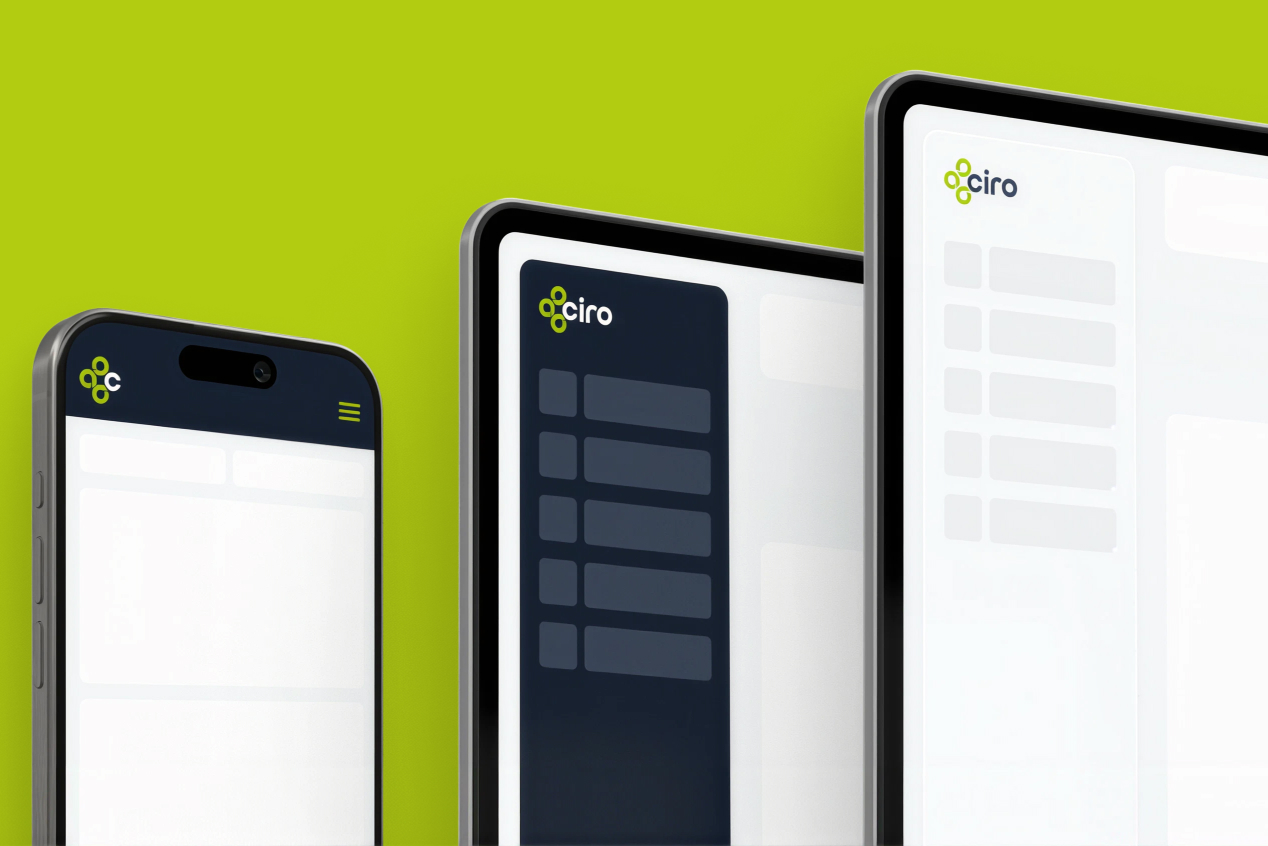
Medical Solutions ran four disconnected products for one staffing business, and client workflow feedback confirmed what that fragmentation looked like from the outside: healthcare organizations juggling multiple systems to manage what should have been one relationship. I was asked how those four products could become one ecosystem. The answer was ciro, the brand, strategy, and design system I built to unify them, then rebuilt again as the business itself changed.
Medical Solutions' staffing business grew the way most healthcare staffing businesses do: one product at a time. Separate experiences supported MSP and travel staffing, local and PRN and shift-based work, the affiliate agencies supplying talent, and the clinicians and healthcare clients on either side of every placement. Each solved a real problem on its own. None were built to talk to each other. Client workflow feedback confirmed the constraint had stopped being inconsistent interfaces and become something bigger: healthcare organizations were juggling multiple disconnected systems to do what should have been one workflow with one staffing partner.
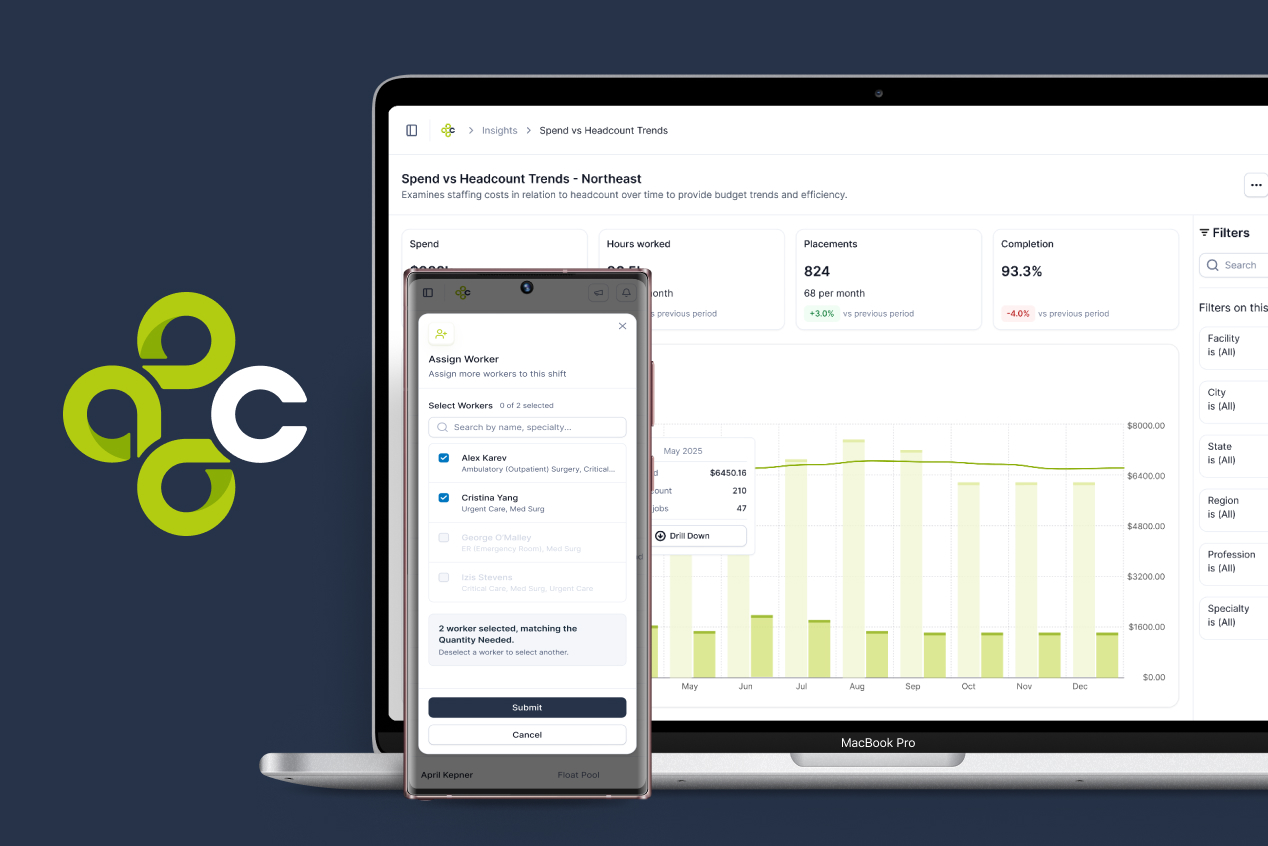
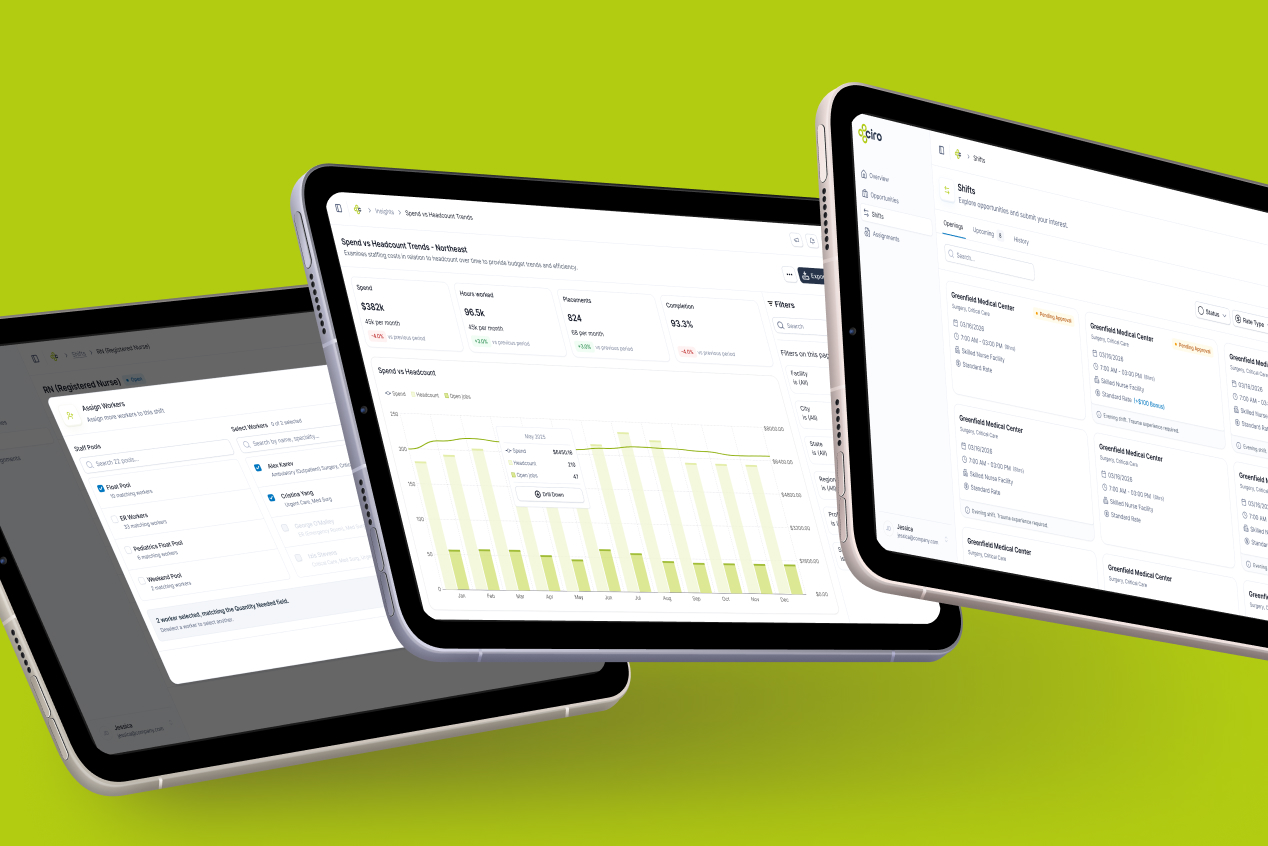
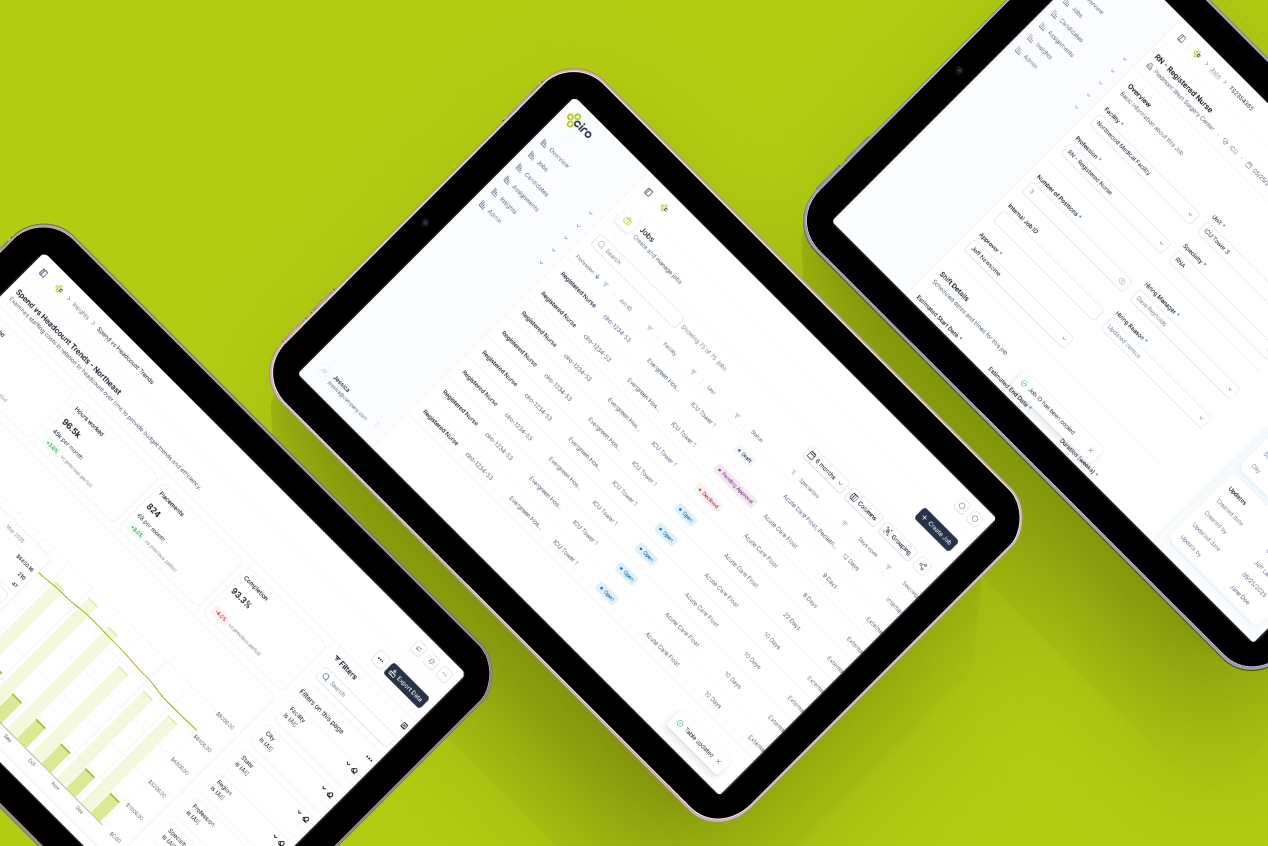
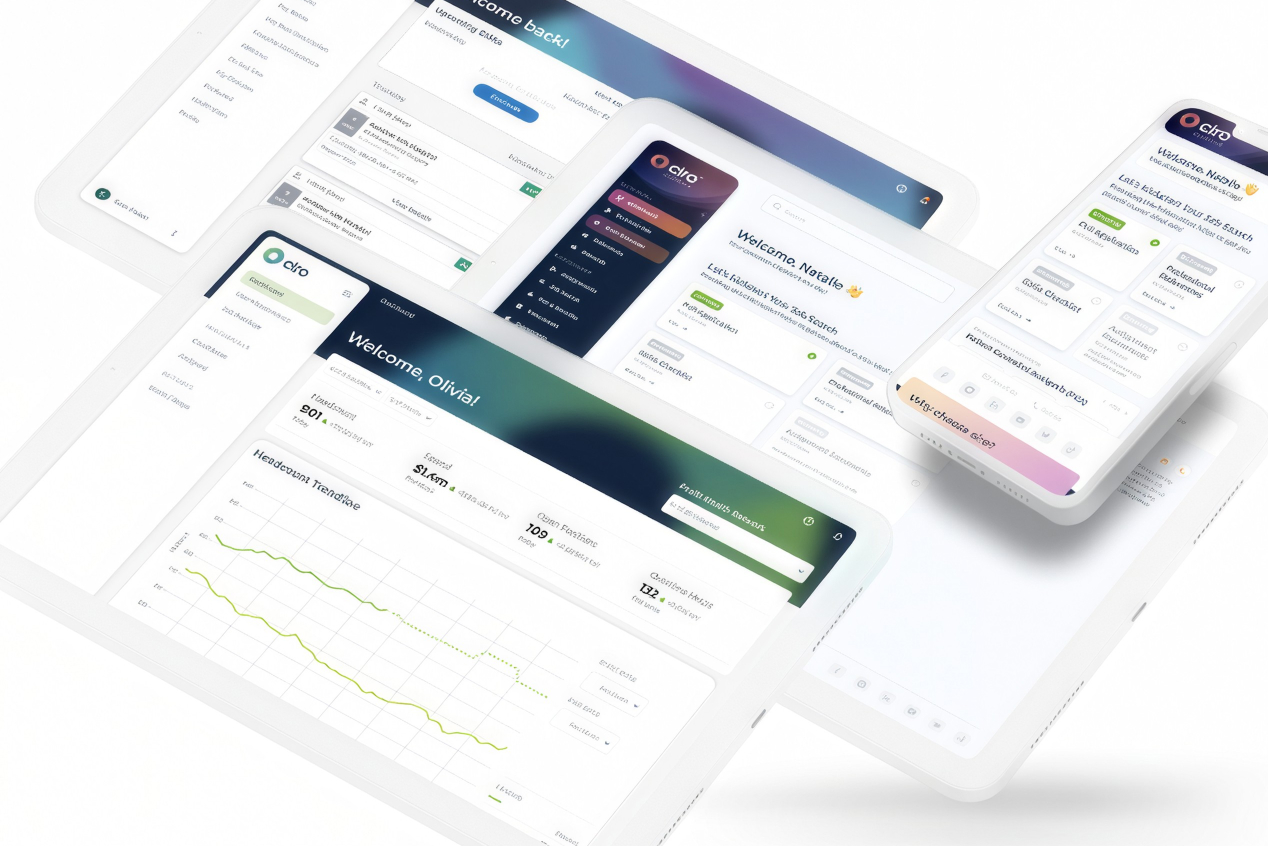
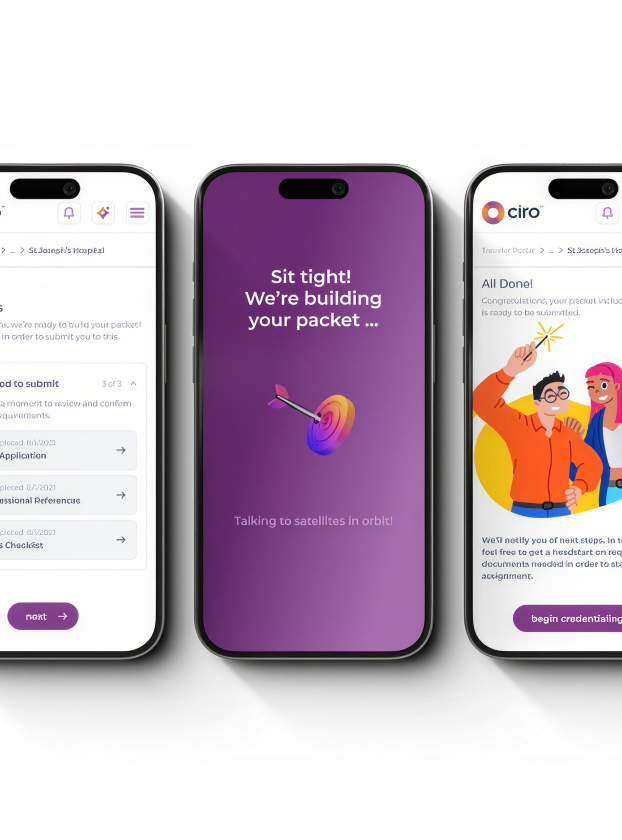
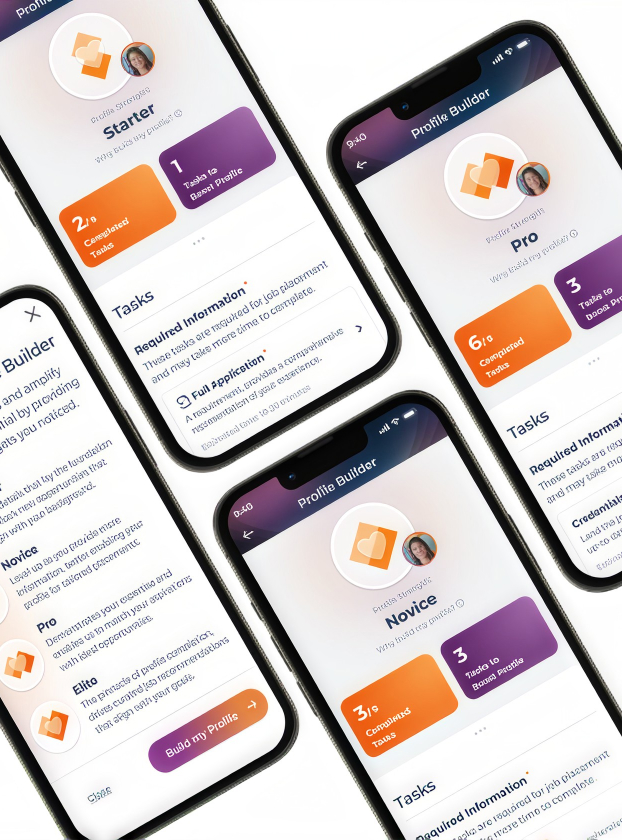
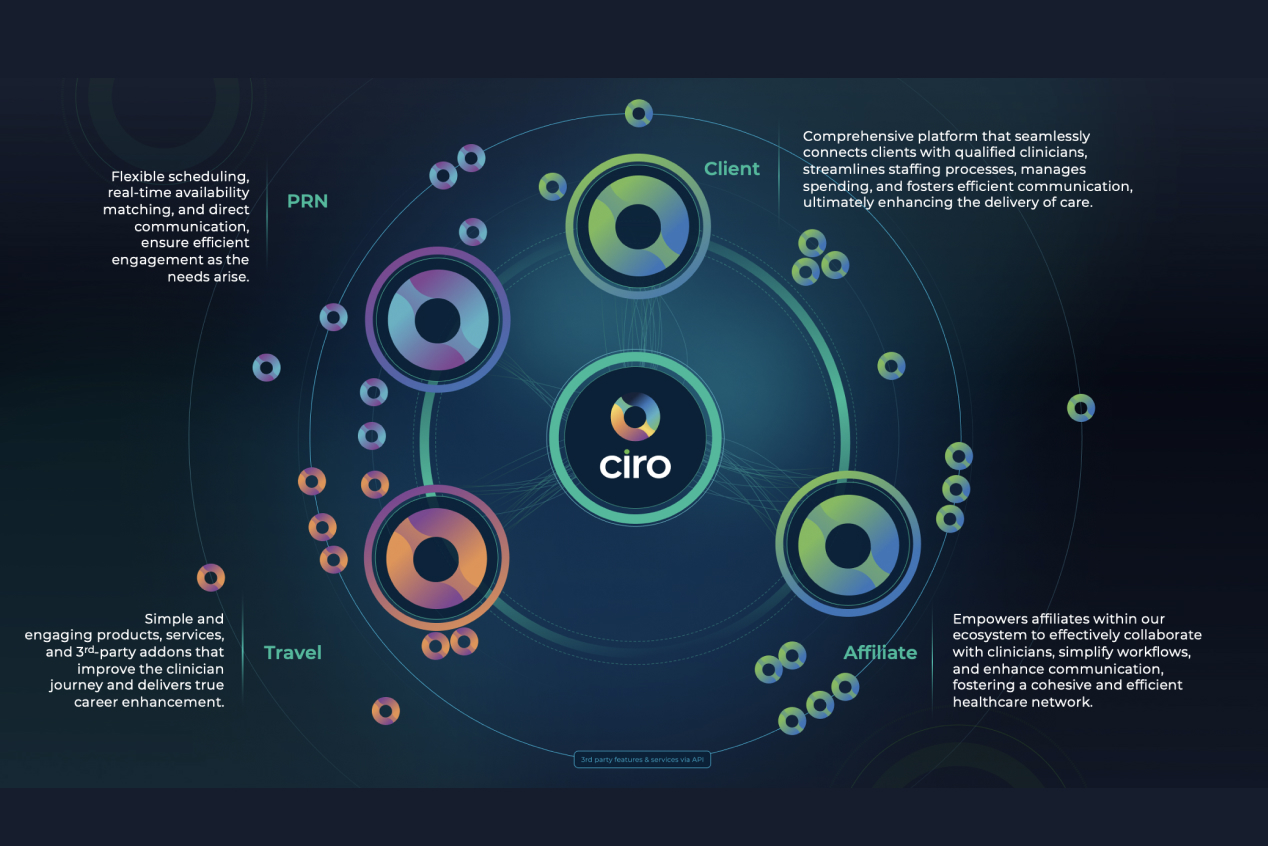
I was asked how those four products could become one ecosystem. The answer was ciro: an umbrella product brand connecting four distinct experiences instead of four disconnected applications. ciro Clinician carried job discovery, applications, onboarding, assignments, pay, benefits, timekeeping, and career management. ciro Talent Management gave healthcare organizations a way to manage jobs, candidates, approvals, and placements. ciro Shift Management served local, PRN, gig, and shift-based staffing. ciro Affiliate supported the partners supplying and managing talent. One ecosystem never meant one generic experience: clinicians, healthcare organizations, and affiliates have fundamentally different goals, so the work was building the experience strategy, the shared design system, and the cross-functional governance that let four audience-specific products feel like one connected platform, backed by a design organization I grew from 3 people to 12 to support it.
The name carried the strategy. ciro (see-roh) takes its name from the Italian form of Cyrus, itself derived from Helios, the sun, a deliberate metaphor for a product built around its users rather than around any one of them: clinicians, healthcare organizations, affiliates, and internal teams each experiencing the same ecosystem through a different lens, all of it orbiting a shared center.
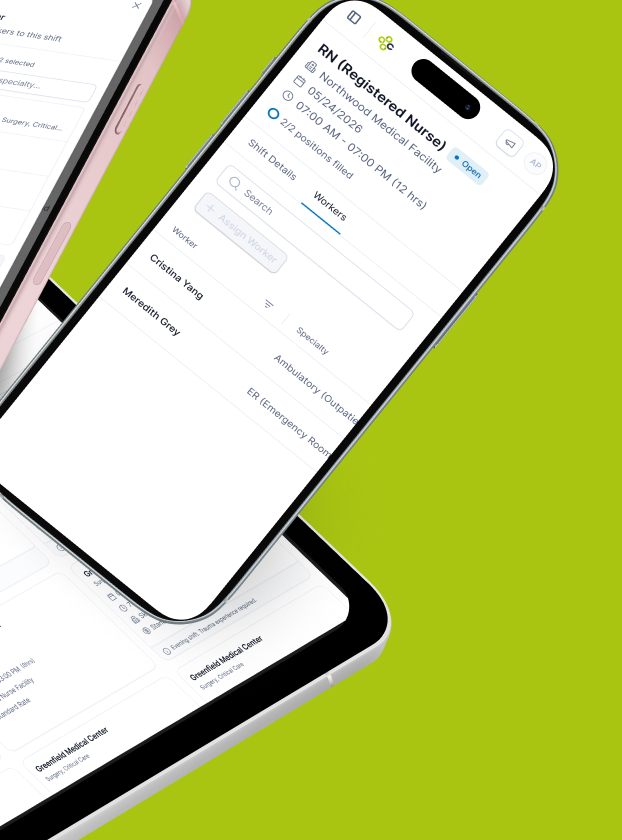
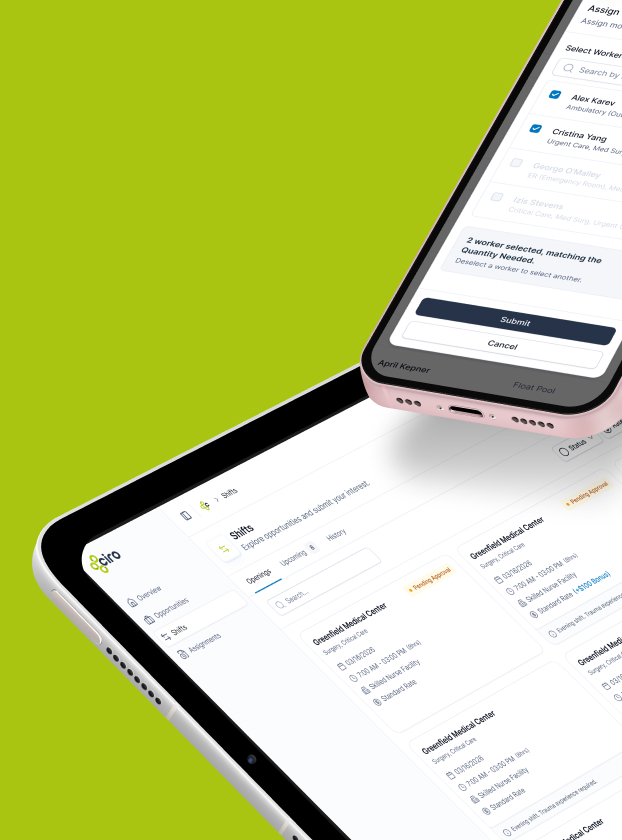
That architecture was tested when business priorities shifted. Legacy products ran separately for years before ciro launched as that four-product ecosystem, which held from roughly 2022 through 2024. Starting in 2025, leadership set a new direction, and shaping what that meant for the brand and the platform was mine to own, the same as it had been from the start. The clinician experience moved back under the flagship Medical Solutions brand, and ciro narrowed to what it is today: a jobs and shift-creation platform built specifically for the hospitals and health systems on the other side of every placement, its visual identity pulled closer to the Medical Solutions master brand to reinforce that relationship. The previous strategy wasn't wrong. It had simply done its job: the product and design architecture underneath it was resilient enough to evolve as the business itself did.
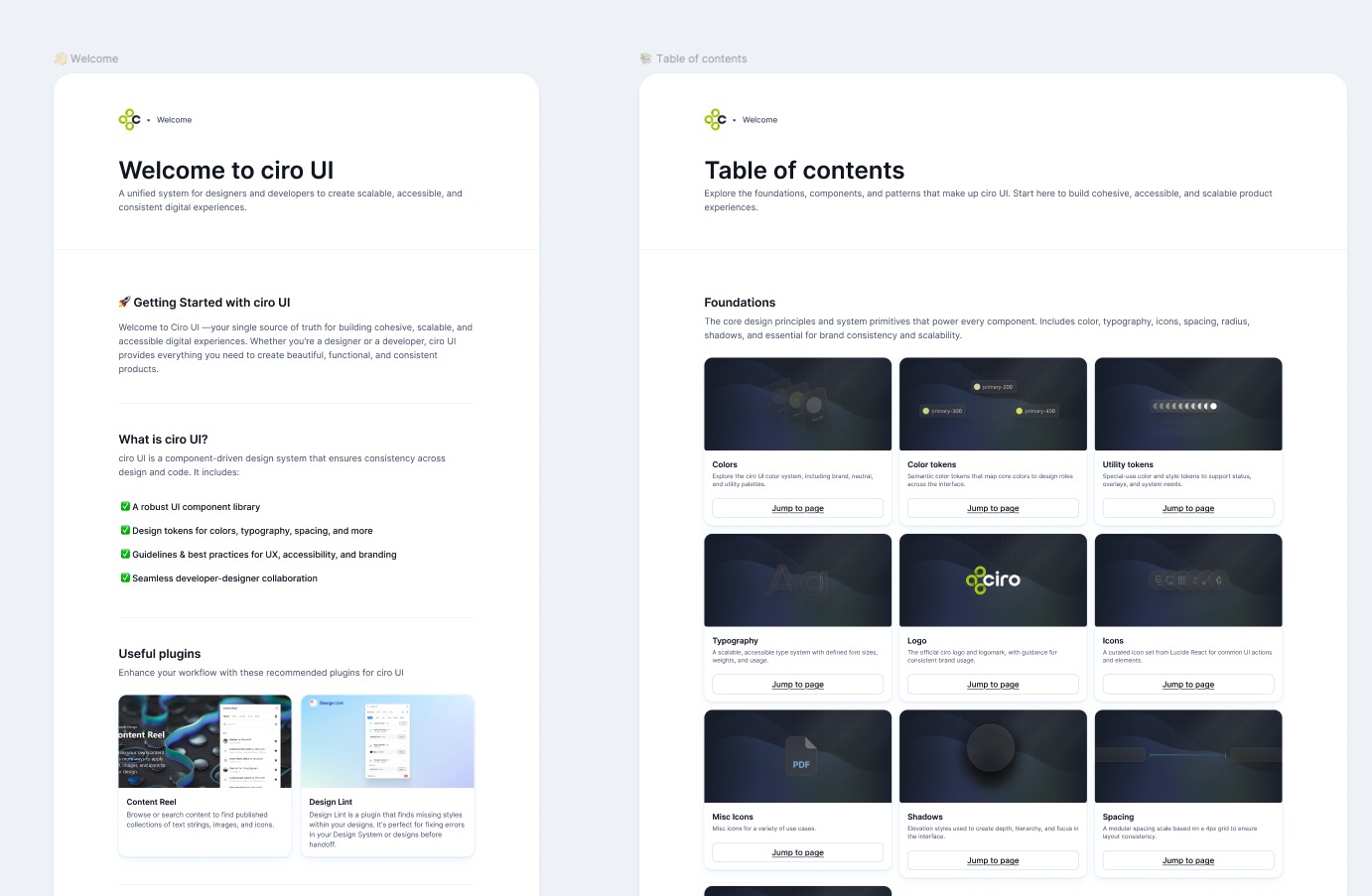
The same case that shaped the Clinician App work applied here: what a healthcare organization or clinician experiences isn't a UX detail, it's the thing standing between the business and the partners it depends on. That argument is what justified investing in one shared design system across four audiences with fundamentally different goals instead of four disconnected ones, and what carried the governance, competency frameworks, and career pathways built to grow the design org from 3 to 12 people sustainably as the platform's surface expanded.
ciro today runs jobs, shifts, and staffing operations across more than 4,000 healthcare facilities nationwide, including one of the largest health systems in the country. Six staffing models, MSP, travel, local, PRN, shift-based, and vendor-managed, now run through that one platform instead of six disconnected tools. Those numbers aren't the point on their own. They're evidence that the underlying product and design foundation could carry multiple staffing models, enterprise-scale workflows, and a business strategy that had already changed once, at the scale a platform like this demands. What Medical Solutions needed from ciro was never just a rebrand. It needed a product and design foundation sturdy enough to hold together no matter how many times the strategy underneath it changed, and to make four very different audiences feel like they were using one connected platform instead of four stitched together. That is the standard ciro was built to.