Cargill Branded Feed carried real scientific credibility, decades of agricultural research behind every product, but its website did not show it. I led the digital brand system that gave five distinct feed brands a shared visual language without flattening what made each one different.
The existing site was dated, difficult to maintain, and static in a way that undersold the technology actually driving the products. The problem was not conversion. It was perception. Cargill Branded Feed had become a company built on innovation and a willingness to challenge conventional agricultural thinking, but its digital presence still read like a legacy operation.
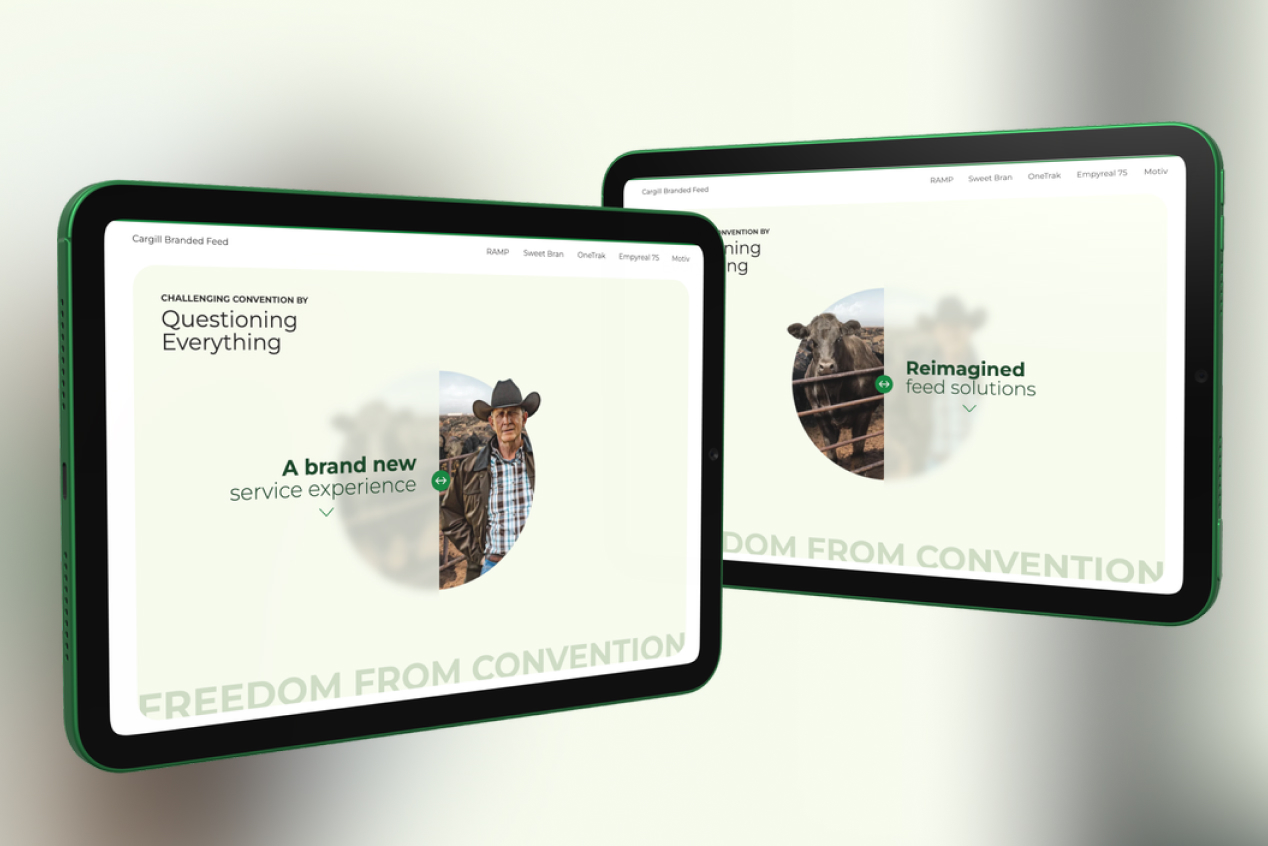
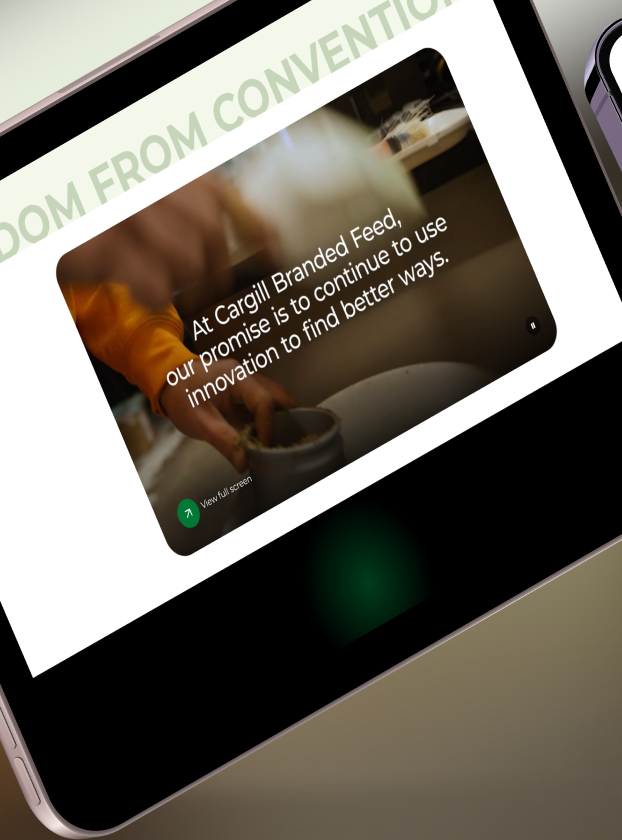
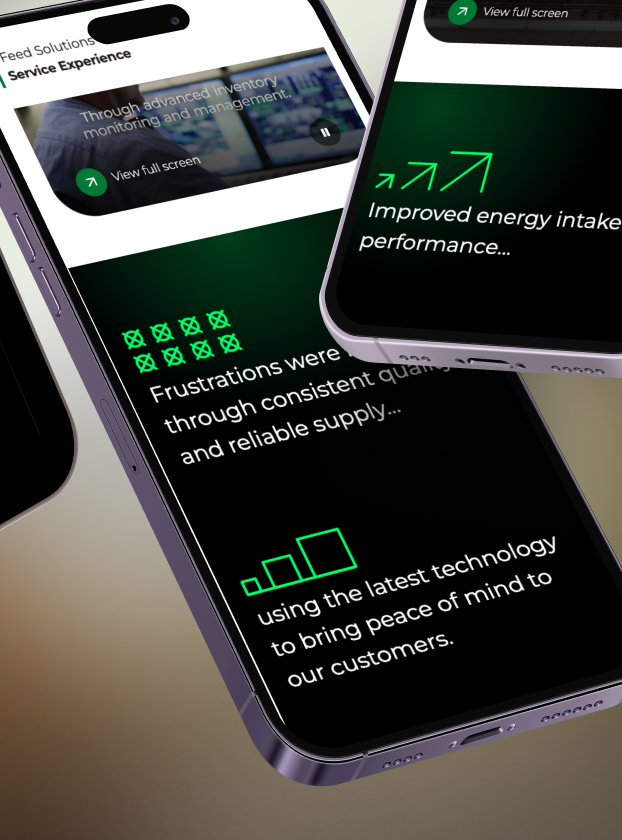
I rebuilt the experience around that gap, moving the visual language from dated to progressive and trading conventional agriculture cues for something that put the science and research front and center. Large-scale imagery, scroll-driven storytelling, and video did the work that dense copy blocks used to carry.
I designed it as a system, not a single template. Every brand, RAMP, Sweet Bran, OneTrak, Empyreal 75, and Motiv, kept its own identity and product story, but shared a common set of components, motion patterns, and interaction rules underneath. I also rebuilt the experience responsively across every breakpoint, since the original was built for desktop and stopped there, so the same brand system held together no matter where a customer encountered it.
The bigger lesson carried past this project: not every design problem is a conversion problem. Sometimes the gap is between what a company has actually become and what its digital presence still says it is. Cargill had already done the hard part, building the science and the credibility behind the products. My job was to make the site finally say so.